The challenge
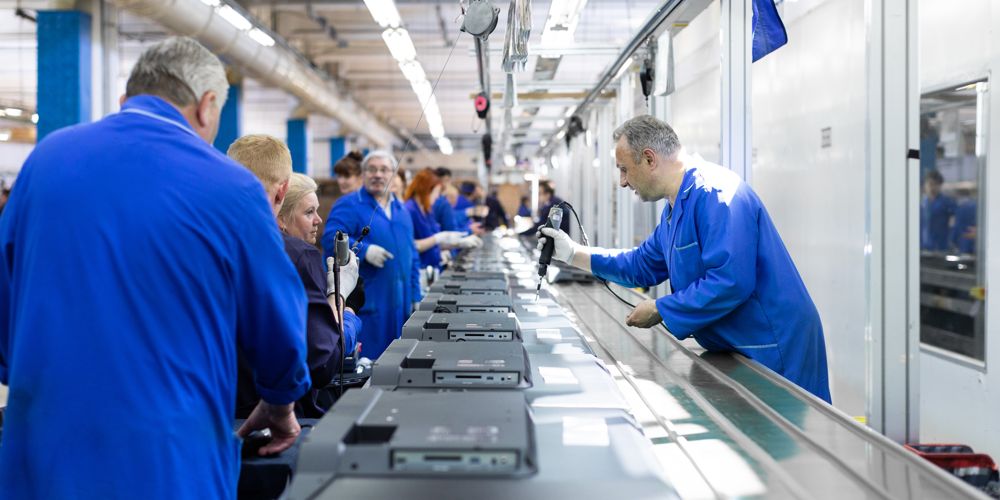
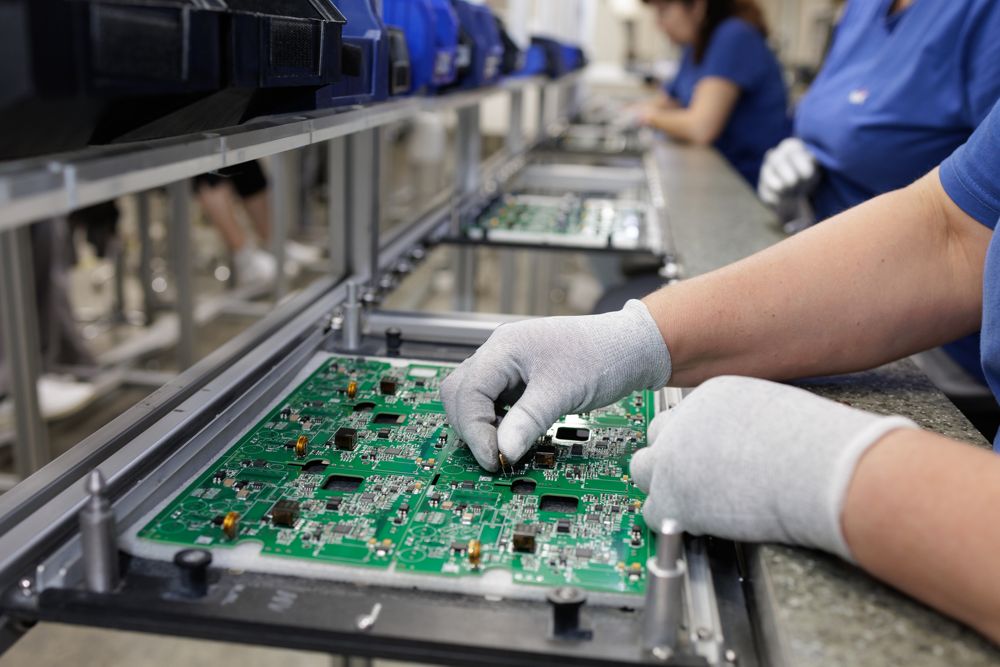
Grass Valley, headquartered in Montreal, Canada, produces broadcast TV production equipment across a wide range of products. It had more than 900 work instructions, created in PowerPoint, Excel and other formats, with no common method or uniformity.
Our work instructions were fragmented. This was because we did not have a specific method for instructions to be created, PowerPoint, Excel, etc., there was no uniformity.
Some assembly procedures ran to more than 60 pages of text. Specialist teams learned to build those products from memory and stopped referring to the instructions, so small changes were easily missed, and it was hard to move other teams onto complex builds. PDFs were also difficult to control: updates went unnoticed, and a file left open on the shop floor could block an update for days.
The solution
Grass Valley wanted visual-led instructions, without long explanations, and found ProcessIQ a perfect fit because of its focus on images. The team built a standard template that every author uses, so the shop floor sees the same format whoever wrote the instruction.
The biggest challenge was the catalogue of 900+ legacy instructions. Legacy work instructions were uploaded into ProcessIQ as PDFs, bringing the entire catalogue into one system. New instructions for products in the same family are created by duplicating an existing one and changing only the steps that differ, and a part change used across many products no longer means editing every document separately.
I am very impressed with the speed at which we converted all the legacy work instructions into ProcessIQ. In just eight months I have added 700 instructions onto the system, 250 of these were done in the last six weeks.
The results
90% of instructions are now in ProcessIQ, with 100% close behind. Changes to legacy products that used to take at least twice as long now take a few clicks, and the support team has more time for valuable work instead of repetitive admin.
PDF is not intuitive for building new instructions. Any changes in legacy products used to be labour intensive and took at least twice the amount of time before ProcessIQ. All it takes now is a few clicks and changes can be applied.
On the shop floor, the clear, visual format has had great feedback from supervisors, and standardised instructions mean staff can move between production teams when demand shifts. Next, Grass Valley is moving production on-screen to go fully paperless.
It has been a relief to implement something that has not created issues.